Drywall Contractors in Brown Deer, WI — Residential & Commercial Drywall Specialists
Ceiling repair, texture work, board installation and finishing across Brown Deer — postwar subdivisions built on former farmland, plus an older village core a few blocks away.
Milwaukee Elite Drywall is your local resource for drywall installation, repair, finishing and ceiling work throughout Brown Deer, WI. We work with experienced drywall professionals who check what a ceiling is fastened to before deciding how to fix its surface.
Brown Deer stayed rural from the nineteenth century through the mid-1940s, incorporated on January 20, 1955, and filled in afterward as the surrounding farms were subdivided. That gives it a housing stock concentrated in the 1950s and 1960s — the early board era rather than the plaster era.
Early board is its own thing. Three-eighths-inch panels were common, framing spacing was not always what a modern assumption would suggest, and ceilings from those decades were routinely sprayed with texture. Anything textured before the early 1980s gets tested before it is scraped.
The exception is the original village, just south and west of where Brown Deer Road meets Green Bay Road, which holds turn-of-the-century buildings, 1920s houses and a stagecoach inn from the late 1800s. A few blocks changes the answer completely.
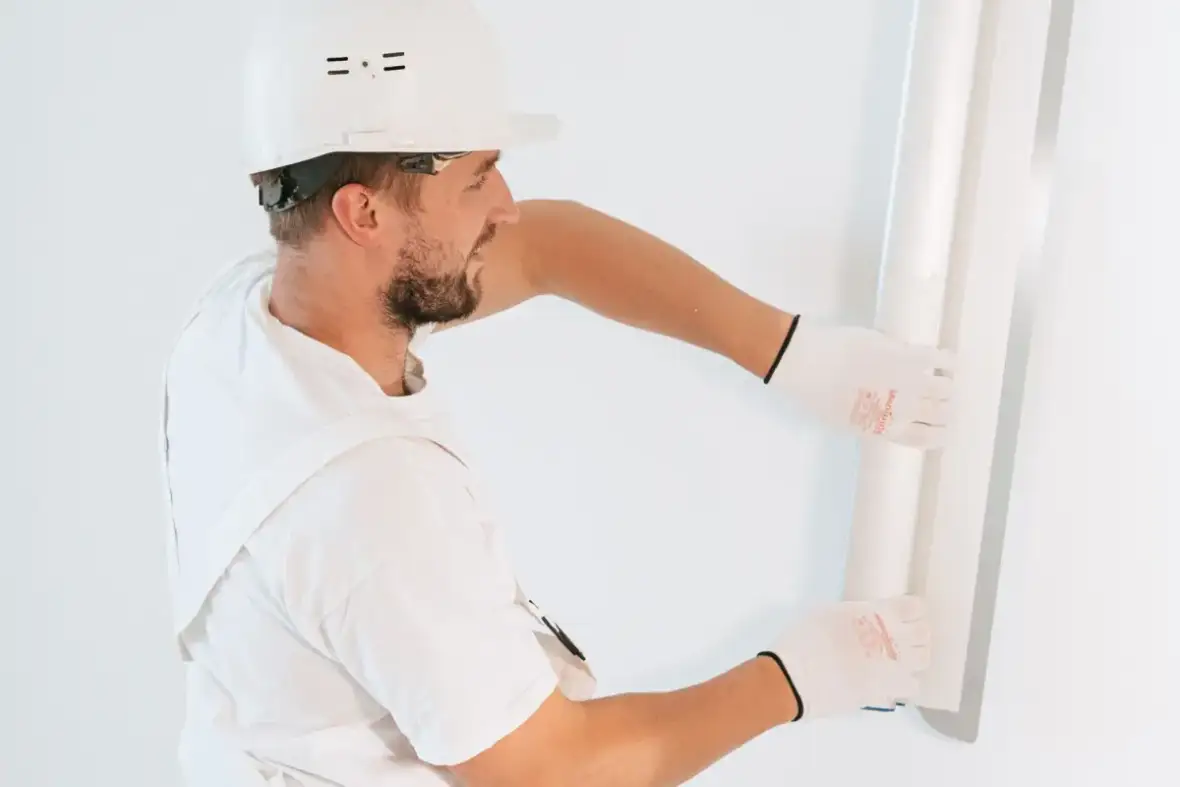
Drywall Services in Brown Deer, WI
Every service below is available at Brown Deer addresses. Each links to the full page for that work — what it involves, what drives the price, and when it is the wrong call.
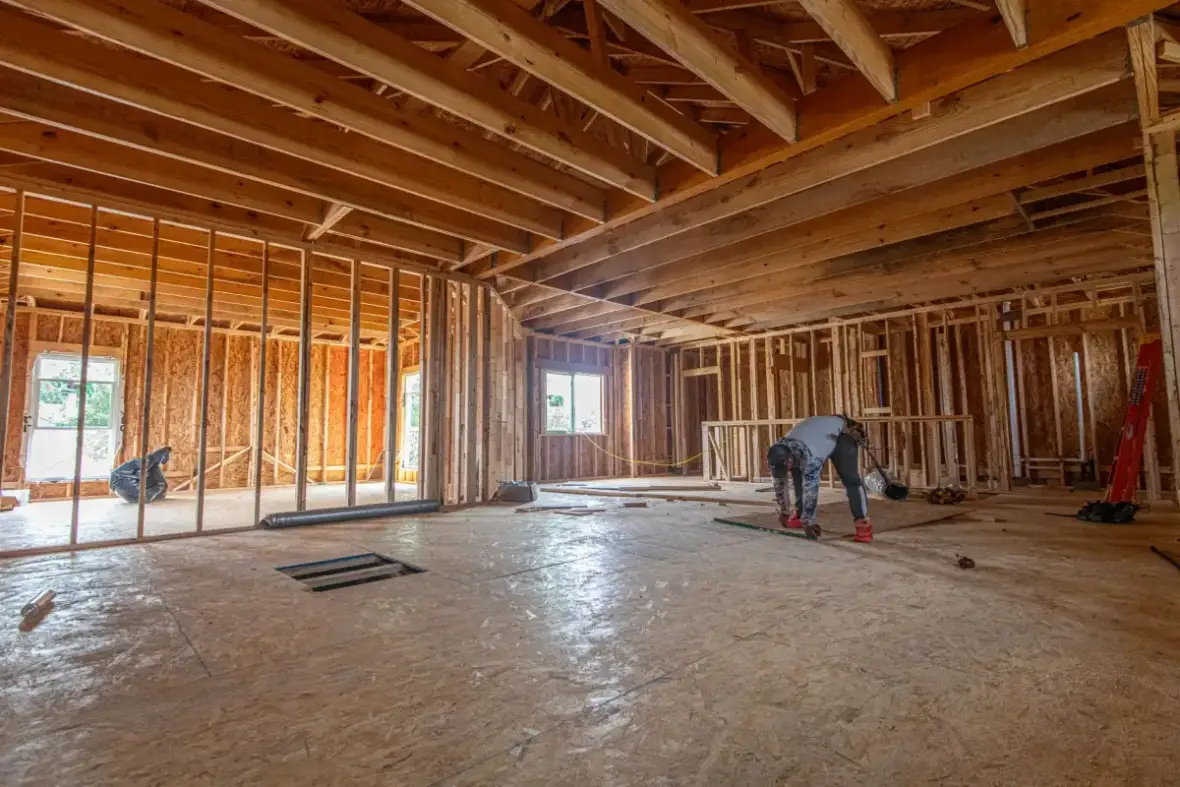
Residential Drywall
Drywall Installation Process for Brown Deer Properties
- 1
Find Out What You Are Actually Boarding Onto
In a city where most houses predate 1940, this step is not a formality. Is the existing surface plaster over wood lath, plaster over rock lath, or board from a previous remodel? Is the framing true-dimension lumber, and is it on a consistent module? How far out of plumb and out of plane is it? All of that is measured before anything is ordered, because a house built in 1912 will not behave like a set of drawings. This is also when furring and shimming get planned, since old framing frequently will not give a flat plane without help and compound cannot make up the difference. In Brown Deer this is mostly a question of which side of the original village core an address sits on, and secondarily of panel thickness — three-eighths-inch board is common in the postwar stock and does not patch like half-inch.
- 2
Decide Panel Type and Finish Level Room by Room
Panel type is a per-room decision rather than a per-job one: moisture-resistant where humidity collects, Type X where a rated assembly is required, standard everywhere else. Finish level is decided the same way, against the lighting each room actually has and the paint sheen planned for it. In older Milwaukee houses this conversation frequently includes a fourth question — how the new work will meet the old — because a room finished beautifully to Level 5 still looks wrong if the junction with the adjoining plaster wall was treated as an ordinary seam. On Brown Deer ceilings the panel decision is usually driven by the framing spacing found on site rather than by what came off the original build.
- 3
Hang the Board
Ceilings first, then walls, so wall panels support the ceiling edge and the corner joint closes tight. Panels run perpendicular to framing where the layout allows, seams stagger, and joints stay away from door and window corners. Screws go in at the assembly's spacing, set below the paper without tearing it. On ceilings the panel thickness follows the framing spacing rather than the price list. Where old framing is irregular, furring strips or shims establish a flat plane first — that is added labor, it is visible in an honest quote, and skipping it produces a wall that is smooth and still looks wrong.
- 4
Tape, Sand and Blend Into What Was Already There
Tape is embedded in a wet bed coat, corner bead is set and checked for straightness, then fill and finish coats go on, each feathered wider than the last, each dried through before the next. Where new board meets existing plaster, the transition is skimmed across a wide band rather than taped at a seam. Sanding is taken to the agreed level and checked under the room's real lighting rather than a work light. Where texture is involved it gets sampled from the original and tested on scrap before any of it reaches the wall.
Old Walls Are the Job Here, Not the Exception
A phone number and a truck in the driveway don't make a company. Here's what's actually different about ours for a job in Brown Deer, WI.
Plaster Gets Treated as Plaster
Most of this city's walls are not drywall, and they don't fail the way drywall fails. The professionals we work with check what is behind the surface before quoting rather than pricing every wall as if it were board.
One Relationship, Start to Final Coat
Your address isn't sold on to three companies. The same experienced drywall professional carries the job from the first walkthrough through the last pass of the sander.
Scope Changes Named Up Front
On a hundred-year-old building, opening a wall sometimes reveals more. The estimate says where that could happen and what it would mean before work starts, instead of arriving as a phone call halfway through.
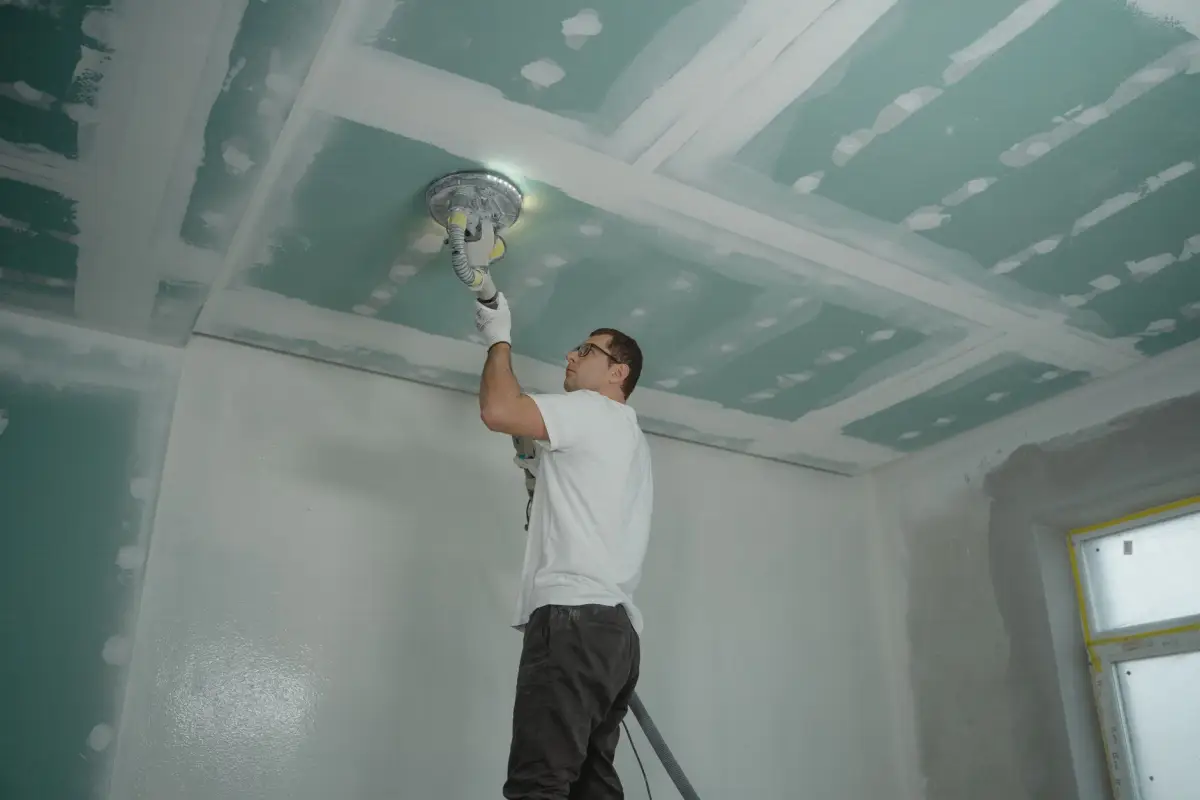
What Drywall Work Looks Like in Brown Deer, WI
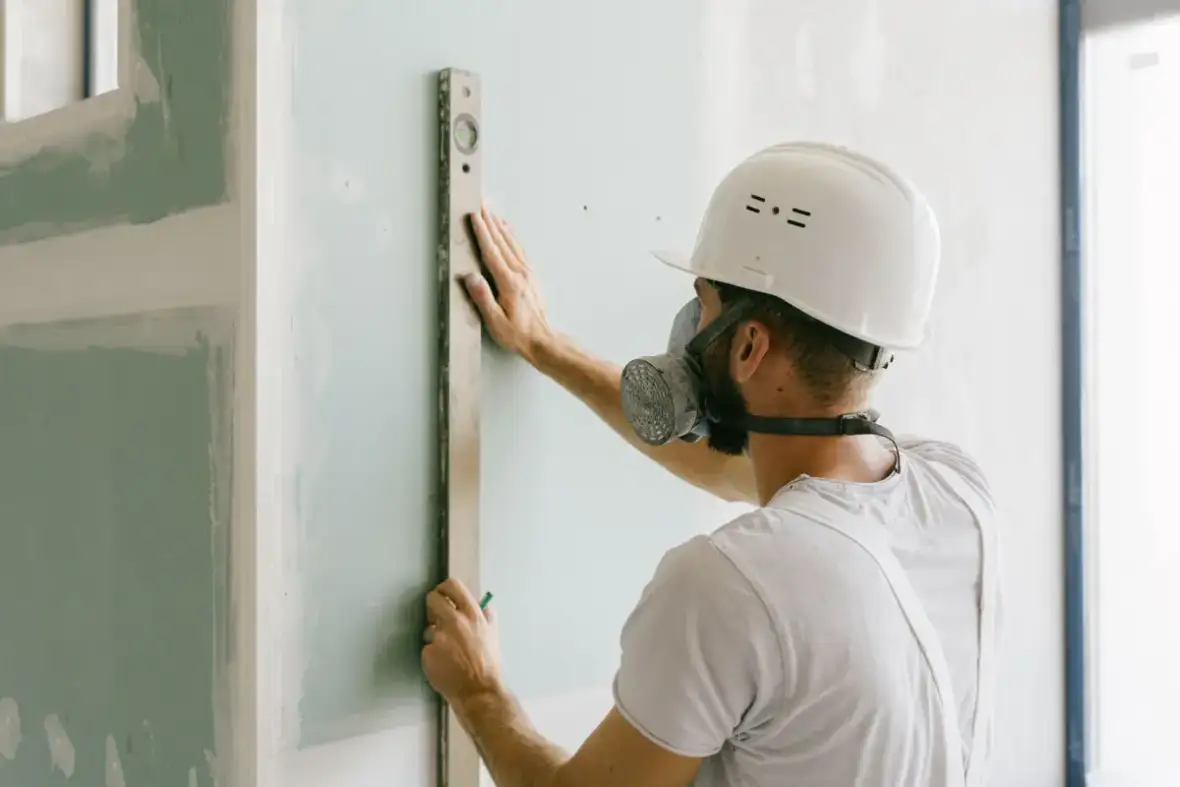
1950s and 1960s Ceilings
The most common local job. Ceilings from Brown Deer's build-out years are frequently three-eighths-inch board, sometimes on spacing that will not support it indefinitely, and often carrying decades of paint on top of sprayed texture. Sag, fastener pops and cracked seams follow. The assessment starts with what the ceiling is fastened to and at what spacing, because a ceiling reboarded to an assumed spacing ends up with fasteners into nothing.
Sprayed Texture and Popcorn Removal
Texture applied before the early 1980s is tested for asbestos before it is scraped, sanded or otherwise disturbed, and the result sets both the method and the timeline. Where removal proceeds, the ceiling is reskimmed or reboarded and taken to a smooth or knockdown finish. Where an existing texture genuinely cannot be matched for a patch, skimming the whole ceiling flat is often better value than chasing a match that will always read slightly off.
The Original Village Core
South and west of the Brown Deer Road and Green Bay Road intersection sits the historic settlement — turn-of-the-century buildings, 1920s houses, and a stagecoach inn from the late 1800s. That is plaster-over-wood-lath territory in a village where everything else is board, and it is close enough to the modern subdivisions that assuming rather than checking is a genuine risk.
Additions and Remodels on Ranch Stock
Seventy years of remodeling on 1950s and 1960s houses means most walls have a junction somewhere. Where an addition meets original work, panel thicknesses can differ and the two sides respond differently to seasonal humidity. Butting them together and taping produces a visible line and then a crack, so the planes get shimmed level and a skim coat carried well across the transition.
Commercial Space Along Brown Deer Road
State Highway 100 runs through the village as Brown Deer Road, a six-lane thoroughfare, and the commercial space along it turns tenants over on lease cycles. That work is partition changes, patched anchor points where fixtures came down, and a paint-ready finish on a date somebody has committed to. Work gets phased so part of a space keeps operating rather than closing it for the length of a finish schedule.
Where This Comes Up Around Brown Deer, WI
Brown Deer School
Built in 1884 and National Register-listed in 1993, it is the village's one federal listing and a marker of how much older the original settlement is than the subdivisions around it.
Farmland Subdivided After 1955
The village was characteristically rural until the mid-1940s and filled in after incorporation as farms were subdivided. That history is why the housing stock clusters so tightly by date, and why the original core stands out against it so sharply.
When We’re Not the Right Call
- A single nail hole, or a hairline crack you can cover with your thumb. That is a patch kit and an afternoon, and nobody should bill a trip across the metro for it. If it turns out to be bigger than it looks once you open it, that is drywall repair.
- Walls that are still wet. Board hung against a cavity that has not dried through will be off the wall inside a year, so the source gets fixed and the drying gets verified first — even when that pushes the start date back a week.
- Framing that has not passed inspection. No professional should close a wall ahead of the inspector, and every municipality out here runs its own building department with its own schedule.
- Anyone who wants a firm number over the phone. Around Milwaukee the wall behind the paint might be plaster over wood lath, plaster over rock lath, board over old plaster, or plaster straight onto concrete block. Those are four different jobs, and a price quoted sight-unseen is a guess with a dollar sign on it.
- Addresses outside Milwaukee County and the neighboring Waukesha, Ozaukee and Washington County suburbs.
Frequently Asked Questions
- Do you serve Brown Deer, WI?
- Yes. Brown Deer is about 8.6 miles north of Milwaukee and is inside the regular coverage area.
- Why is my ceiling sagging between the joists?
- Usually panel thickness against framing spacing. Three-eighths-inch board was common through Brown Deer's build-out years and lacks the stiffness to span wider spacing without deflecting over decades, particularly with sprayed texture and multiple paint layers adding weight. The durable fix is reboarding at the correct thickness rather than trying to push the existing panel back up, which does not hold.
- Do I need an asbestos test before removing popcorn texture?
- If the house predates the early 1980s, yes, and before anything is disturbed rather than after. Brown Deer built out through exactly those decades. The test is inexpensive relative to the alternative, and its result determines the method, the containment and the schedule. Nobody should quote a removal timeline before it comes back.
- My house is near the old village. Is it plaster?
- Possibly, and it is worth checking rather than assuming, because the two eras sit close together here. Push a pin into an inconspicuous spot — board takes it easily, plaster resists and may crumble — and check the wall thickness at an outlet. A patch sized for board sits proud of a plaster wall, and that edge shows through paint no matter how carefully it is feathered.
- What does drywall work cost in Brown Deer?
- Square footage, ceiling height, finish level, panel type and access set the base. On ceilings, the number moves depending on whether the existing panel thickness and framing spacing make a patch viable or mean the section has to be reboarded. On anything with pre-1980s texture, the asbestos result affects both cost and schedule, so it comes first.
Learn More
- Gypsum Association GA-214 — the published definition of drywall finish levels 0 through 5
- City of Milwaukee Development Center — local permitting and inspection requirements for residential construction
- Wisconsin DSPS Uniform Dwelling Code — the state code governing one- and two-family dwelling construction
Need Drywall Installation in Brown Deer, WI?
Tell us what’s going on and get an immediate on-site quote — no charge for the estimate, and no obligation to book it.
Get My Free Estimate