Commercial Drywall Repair in Milwaukee, WI — Repairs in Space That Cannot Close
Corridor, storefront and ceiling damage repaired across Milwaukee and its surrounding suburbs in buildings that keep operating, matched to the finish standard already in place.
Commercial Drywall Repair in Milwaukee, WI
Milwaukee Elite Drywall is your local resource for commercial drywall repair throughout Milwaukee and its surrounding suburbs. We work with experienced commercial drywall professionals who establish what a wall is made of before deciding how to fix it.
Commercial drywall repair is a scheduling problem wrapped around a trade problem. The damage is usually simple — a corridor gouged by a cart, a corner knocked off, a ceiling opened for a fixture change. What makes it commercial is that the building keeps working while it gets fixed, and that the finish has to match a standard nobody wrote down.
The consideration residential repair never carries is rating. Where a damaged wall forms part of a rated assembly — separating tenancies, enclosing a corridor, protecting a stair — the repair has to restore the rating rather than just close the hole. Patching a rated wall with whatever board is on the van is a code failure that stays invisible until the moment it matters.
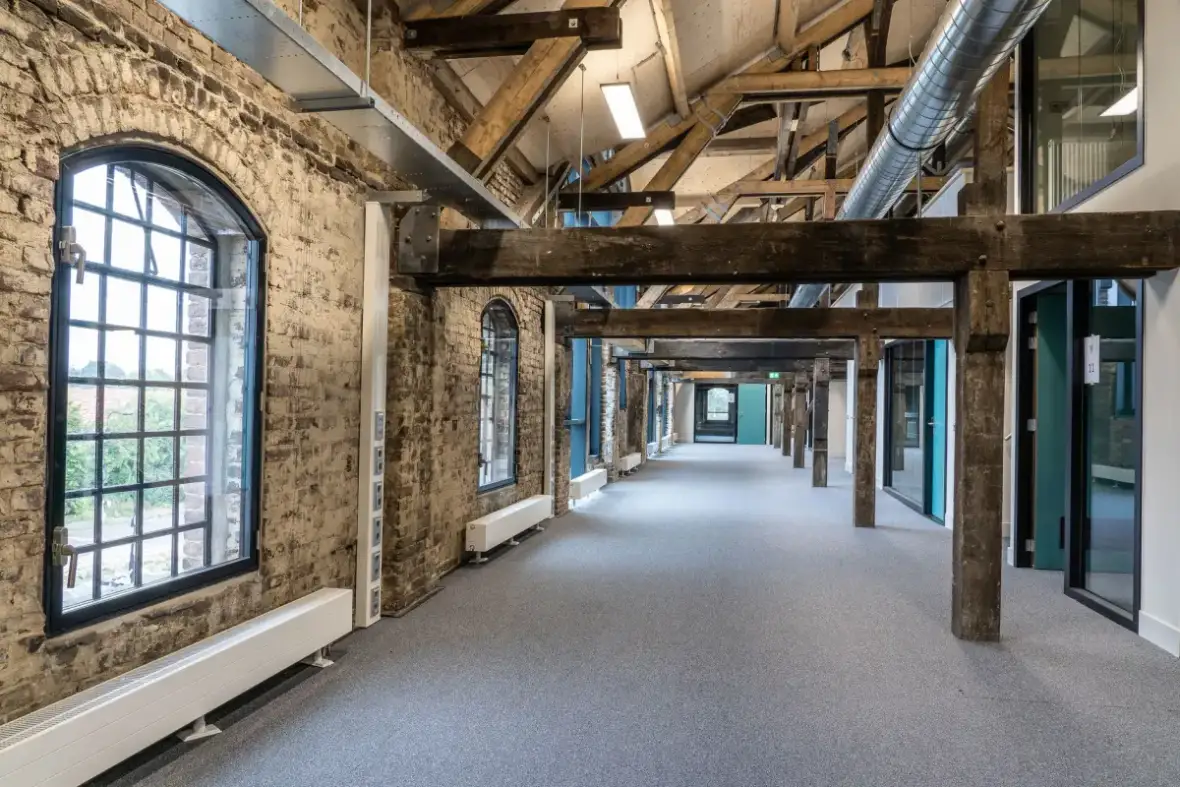
Milwaukee adds a question that catches out contractors used to modern buildings: what is this wall actually made of? A large share of commercial space here sits in converted industrial and pre-war office buildings, where a wall might be a modern steel-framed partition, or furring strips and board over structural masonry, or original plaster that has been painted so many times it looks like anything else. Those three take three different repairs, and cutting into the second expecting the first is how a small patch becomes a conversation about the building.
What’s Included in a Milwaukee Commercial Drywall Repair Quote
- Wall construction identified before cutting — framed partition, furred masonry or plaster
- Damage assessed for whether the wall forms part of a rated or acoustic assembly
- Work scheduled around operating hours, after close or in phased sections
- Dust containment and protected routes through occupied space
- Damaged board cut back square and backed so the patch has real bearing
- Rated assemblies restored with the correct board type and layer count
- Existing texture and finish level matched to the surrounding building standard
- Area cleared, cleaned and returned to use before the space reopens
Commercial Drywall Repair in Milwaukee, WI
Office Drywall Repair
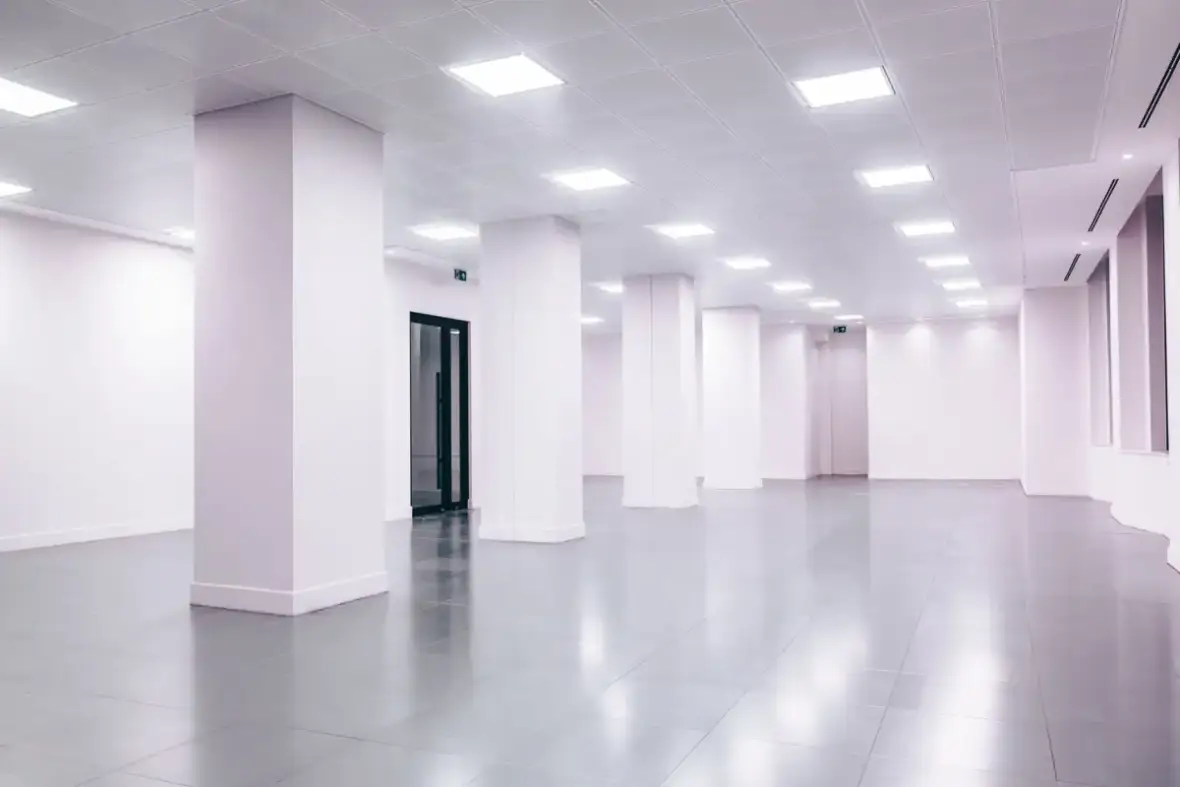
Partition, corridor and reception damage in working offices, from downtown towers to converted floors in older buildings. The causes are unremarkable — furniture moved, monitors and whiteboards pulled down, equipment relocated during a reorganization. The complication in this market is what the anchor went into. In a converted building an office partition may be board on furring over structural masonry, in which case there is no cavity behind it and no framing to cut back to, and the patch has to be handled accordingly rather than treated as an ordinary opening.
Retail & Storefront Drywall Repair
Sales floor, stockroom and storefront damage, generally against a deadline tied to trading hours rather than to construction logic. Retail walls take continuous punishment from stock movement and fixture changes, and the same locations fail repeatedly. Milwaukee's retail sits heavily in older buildings — Third Ward, downtown, the neighborhood commercial streets — which means narrow tenant spaces, access through the sales floor, and shells that are neither square nor level. Where the same spot fails annually, the useful answer is impact-resistant board or a protective detail rather than another patch.
High-Traffic Wall Damage Repair
Corridors, service routes and loading areas where carts, trolleys and equipment pass the same wall every day. The damage has a signature: a horizontal band of dents and gouges at a consistent height, corner beads crushed or exposed, scuffing that no longer cleans off. In healthcare and institutional buildings the traffic includes equipment carts heavy enough to do real damage to standard board. Repairing the surface without addressing the cause books the same call next year, which is why this work pairs naturally with corner guards, protection rails or impact-resistant board at the height it keeps happening.
Commercial Ceiling Drywall Repair
Ceiling damage from fixture changes, sprinkler or mechanical work, leaks from above, and access cuts other trades left open. Commercial ceilings are frequently part of a rated assembly, in which case an opening gets closed with the correct board and detail rather than covered. In converted buildings the ceiling may also be a modern plane hung below an original structure, which means what is above it is a void containing other trades' work rather than a joist bay — worth establishing before cutting into it from below.
Commercial Drywall Patching & Replacement
The judgment call about when patching stops being right, which sits at a lower threshold in commercial space than in a house. These buildings light large flat surfaces evenly and continuously, which shows every accumulated repair, and appearance is part of what a tenant pays rent for. Where damage recurs in one place or a wall has collected repairs, replacing a full section between corners produces a better result and ends the cycle. On rated walls, replacing a section is often cleaner than reinstating the assembly around a series of small openings.
Signs You Need Commercial Drywall Repair
- Corridor or common-area walls with accumulated dents, gouges and scuffing
- Damage at cart height recurring in the same place each year
- Corner beads crushed or exposed on high-traffic corners
- An opening left in a wall or ceiling by another trade
- A wall that turns out to be board over masonry rather than a framed partition
- A rated wall needing its rating restored rather than just its surface
How Commercial Drywall Repair Works
- 1
Find Out What the Wall Is and What It Does
Two questions before any cutting. What is it made of — a framed partition with a cavity, board furred over structural masonry, or original plaster? And what is it doing — is it rated, acoustically specified, or simply dividing space? Where drawings exist they get read; where they do not, the construction itself is examined, including board type stamped on the panel, layer count, and whether the wall runs to the underside of the deck. In this market the first question is not academic: cutting into furred masonry expecting a stud cavity changes the repair method entirely.
- 2
Schedule It Around the Building
Commercial repair is planned around occupancy before it is planned around the trade. Work goes after close, overnight, or phased so one area stays in use while another is worked on. Containment goes up at the boundary of the work zone with protected routes for material in and debris out, because dust reaching a tenant's stock or a dining room is a larger problem than the damage was. Where the work is genuinely disruptive, it is worth pricing a short full closure against a longer phased approach, since phasing is not automatically cheaper once repeated setups are counted.
- 3
Cut Back, Restore the Assembly, Match the Finish
Damaged material comes back to clean square edges with backing added so the new piece bears properly. On furred masonry that means fastening to the furring or adding backing between strips rather than looking for studs that are not there. On a rated wall the replacement board matches the original type and layer count, second-layer joints offset, and any firestopping disturbed at a penetration reinstated to its listed detail. Then the finish gets matched — texture sampled on scrap, and the finish level matched to the building standard rather than defaulted.
- 4
Clear the Space and Hand It Back
Because the space has to open, finishing includes leaving no trace. Dust is removed from surfaces well beyond the immediate work area, since fine compound dust travels and settles on desks, stock and fittings nowhere near the repair. Protection comes down, routes get cleaned, and debris leaves the building rather than waiting in a corner. The repair is primed so it does not flash against surrounding paint under the building's own lighting. Where a recurring cause was identified, that recommendation goes in writing rather than being mentioned to whoever happened to be on site.
What Does Commercial Drywall Repair Cost in Milwaukee, WI?
- What the wall is made of, since furred masonry repairs differently from a framed partition
- Whether the wall forms part of a rated or acoustic assembly
- Scheduling, since after-hours and overnight work carries a premium
- Containment required to protect occupied areas, stock or food service
- Number and spread of repairs, since batching lowers cost per repair substantially
- Ceiling versus wall work and the access equipment required
- Texture and finish matching to an existing building standard
| Service | Cost Per Sq. Ft. | Typical Job |
|---|---|---|
| New Drywall Installation | $1.50 – $3.00 per sq. ft. | $1,000 – $3,254 per project |
| Small Patch or Hole | $75 – $350 per patch | $300 – $500 for a contractor visit |
| Larger Wall Repair | $500 – $800+ per patch | Scales with how much comes out |
| Ceiling Repair | $297 – $472 per hole | $220 – $1,300 for the full ceiling |
| Water-Damaged Drywall | $500 – $2,500+ | Depends how far the moisture travelled |
| Texture Matching | $150 – $450 per patch | Runs 30 – 40% above a smooth finish |
Based on 2026 national cost-guide data from Angi, HomeGuide, and Homewyse. These guides price drywall work, and Milwaukee's older housing stock frequently isn't drywall — plaster repair, or a wall already layered with board over plaster, sits above these ranges because the method changes rather than just the square footage. Access in stairwells and occupied flats moves it too. You get a firm number after someone sees the job.
Commercial repair pricing tracks access and timing more than damage size. The same patch costs meaningfully more overnight in an occupied building than during the day on an empty floor, and containment is real scope rather than overhead. In Milwaukee's older commercial stock there is a second variable: a repair in furred masonry or original plaster takes longer than the same-sized opening in a modern partition, and a quote that assumed a stud cavity will need revising once the wall is open.
What to Look for in a Milwaukee Commercial Drywall Repair Contractor
They Establish the Construction Before Cutting
In converted buildings a wall may be board over masonry with no cavity at all. Finding that out with a saw already running is how a small repair grows.
They Check Whether the Wall Is Rated
A patch that closes a hole in a rated wall without restoring the assembly is a code failure nobody sees until it matters. Asking first is the whole difference.
They Plan Around Your Trading Hours
Occupied space is the constraint that defines commercial repair. A contractor who proposes a schedule rather than just a date understands the job.
They Name the Cause of Recurring Damage
Damage at cart height in the same corridor every year is not a drywall problem. Suggesting impact-resistant board or a protection rail is an attempt to end it rather than bill it annually.
Residential & Commercial Commercial Drywall Repair
Residential
Residential repair is covered on the drywall repair page and works differently: no rated assemblies to reinstate, no trading hours to work around, and a homeowner on site to decide things. The methods overlap; the constraints do not.
Commercial
Commercial repair is defined by the building staying in use. Work is scheduled around occupancy, contained so dust does not reach tenants or stock, matched to an existing building standard, and cleared completely before the space reopens. Where a wall carries a rating, restoring it is part of the repair rather than an extra.
When Commercial Drywall Repair Isn’t the Right Call
- Single small repairs in a residential property. The commercial premium on scheduling and containment buys nothing at a hallway dent.
- Damage to a rated wall where a cosmetic patch would be preferred to save money. The rating is either restored or it is not.
- Recurring damage where the cause is not to be addressed. Repairing the same corridor annually is a choice worth making deliberately.
- Original plaster in a historic commercial interior where restoration rather than patching is wanted. That is a different specialty.
- Buildings outside Milwaukee County and the neighboring Waukesha, Ozaukee and Washington County suburbs.
Frequently Asked Questions
- The wall in our office is solid behind the board. What is it?
- Most likely furring strips and drywall over structural masonry, which is extremely common in Milwaukee's converted and pre-war commercial buildings. There is no stud cavity behind it and nothing to cut back to in the usual sense — the board is fastened to thin wood or metal strips run across the brick. Repairs there need backing added between the strips or the patch sized to land on them. It is a routine situation for anyone who works in these buildings and a surprise for anyone who does not.
- Can repairs be done outside our business hours?
- Yes, and for occupied commercial space it is usually the default. Work is scheduled after close, overnight, or phased so part of the floor stays in use. It carries a premium over daytime work on an empty floor, and it is worth pricing both — a short full closure is sometimes cheaper overall than a longer phased approach once the extra setups and containment cycles are counted.
- How do I know if a damaged wall is fire-rated?
- Drawings are the reliable source. Failing that, the construction tells you a lot: rated walls typically use 5/8 inch Type X board, often in two layers at higher ratings, and run to the underside of the structural deck rather than stopping above the ceiling grid. The board is usually stamped with its type. If there is doubt, treating it as rated until confirmed is the sensible default, because the cost difference is small and the consequence of guessing wrong is not.
- Why does the same corridor wall keep getting damaged?
- Because something is hitting it repeatedly and the wall is not built for it. Standard board is not an impact surface. The damage usually forms a horizontal band rather than random marks, which identifies the cause — carts, trolleys or equipment passing at a consistent height. The durable answer is impact-resistant board, a corner guard, or a protection rail at that height. It costs more than a patch once and considerably less than a patch every year.
- Will the repair match our existing walls?
- That is the goal and it is where the care goes. The existing texture is sampled and reproduced on scrap before anything is applied, and the finish level is matched to the building standard rather than defaulted. The complicating factor in commercial space is lighting: these buildings run even, continuous light across large flat surfaces, which reveals a mismatch far more readily than varied residential lighting does. In converted buildings with large original windows, daylight adds a second unforgiving condition.
- Can you handle a list of repairs across a whole building?
- That is the most cost-effective way to buy this work. Facilities lists of accumulated small damage get handled in one visit with one round of containment, which drops the cost per repair substantially against individual call-outs. It also means one disruption to the building rather than many, which is usually worth more to a facilities manager than the money saved.
Learn More
- UL Product iQ — the listed assembly database for confirming what a rated wall must be rebuilt to
- Gypsum Association GA-214 — the finish-level standard used to match a repair to an existing building standard
- Association of the Wall and Ceiling Industry — the trade association covering commercial wall and ceiling practice
Need Commercial Drywall Repair in Milwaukee, WI?
Tell us what’s going on and get an on-site estimate — no charge for the visit, and no obligation to book the work.
Get My Free Estimate