Drywall Replacement in Milwaukee, WI — Wall and Ceiling Section Replacement
Board taken out and replaced across Milwaukee and its surrounding suburbs, with removal, disposal, a proper look at what is in the cavity, and finishing back into the surfaces that stay.
Drywall Replacement in Milwaukee, WI
Milwaukee Elite Drywall is your local resource for drywall replacement throughout Milwaukee and its surrounding suburbs. We work with experienced drywall professionals who treat an open wall as the opportunity it is rather than something to close as fast as possible.
There is a point where repairing a wall stops being the economical choice, and most people reach it two or three repairs after it arrives. A surface patched repeatedly develops a subtly uneven plane — each patch feathered slightly differently, each absorbing paint a little differently — and under raking light it reads as a wall that has been worked on rather than a wall. At that stage the fourth patch costs less on the day and more across the decade.
Replacement is also right when the board has failed rather than been damaged. Saturated gypsum loses core strength permanently and does not recover when it dries. A ceiling that has taken a set will not come back with refastening. Board that was the wrong thickness for its span was never going to hold.
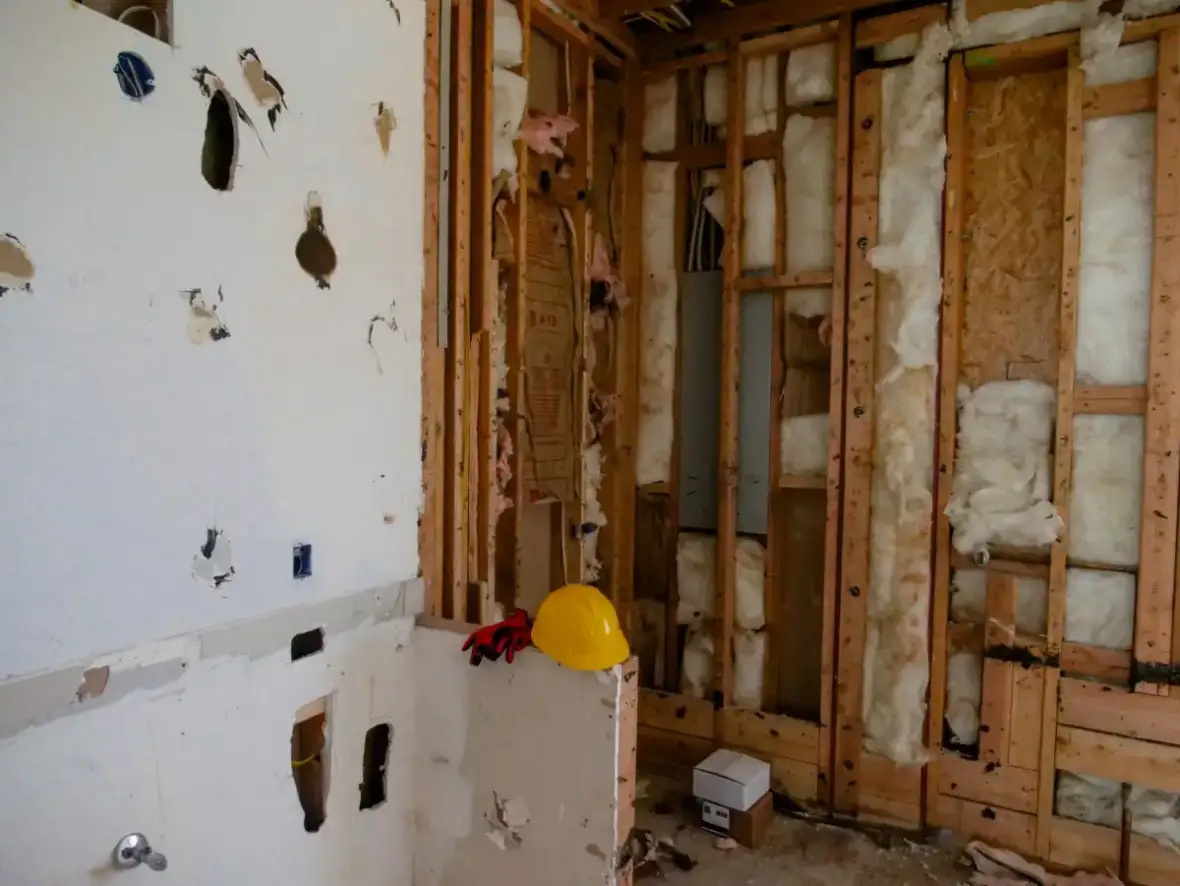
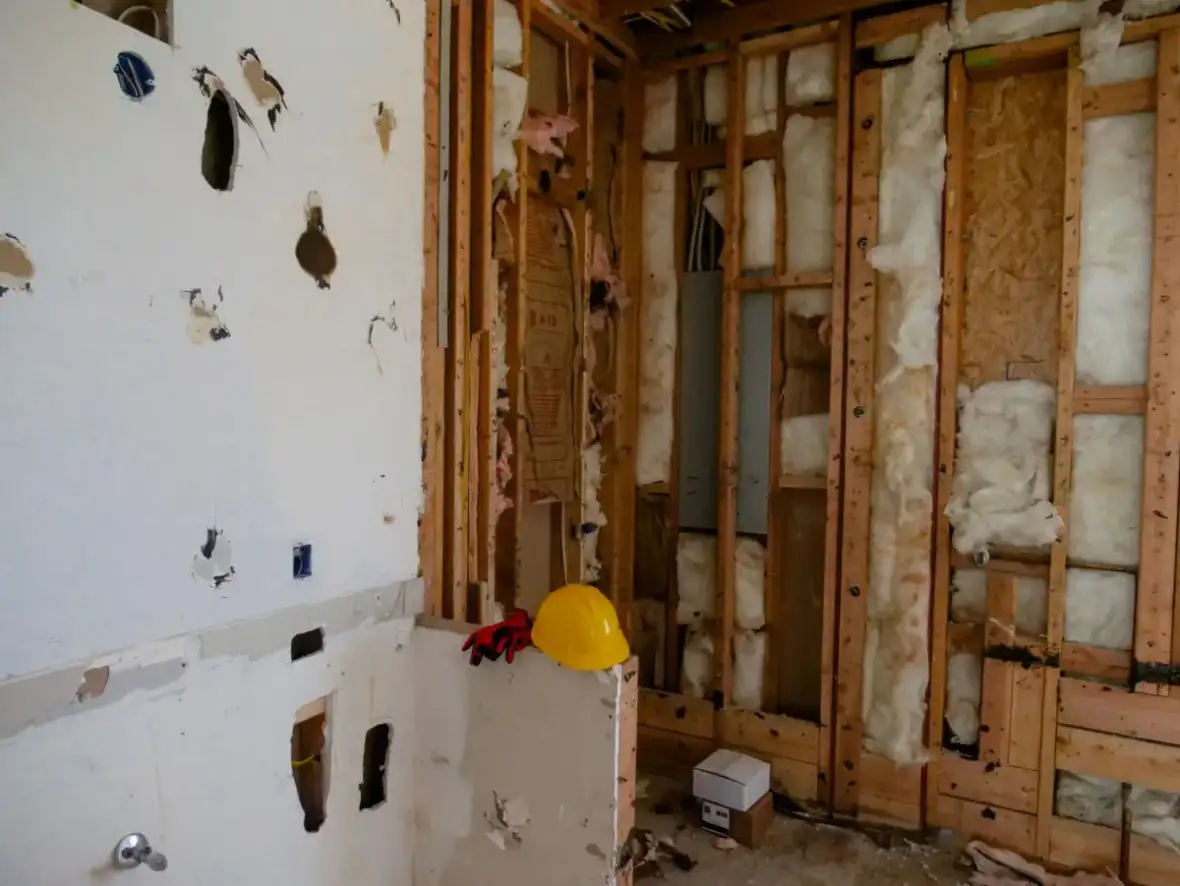
In Milwaukee there is a third driver that barely exists in newer markets, and it is the most valuable one: what is behind the wall. In a housing stock where about 38.6% of homes predate 1940, opening a wall frequently reveals exterior cavities with no insulation in them at all, wiring from an era with different expectations, and framing nobody has looked at since it went up. Replacing board is the only economical moment to deal with any of that. Closing it back up without looking is a decision that costs nothing today and cannot be revisited for another twenty years.
What’s Included in a Milwaukee Drywall Replacement Quote
- Honest assessment of whether replacement or repair is the better economics
- Section boundaries set at framing members so new board has bearing
- Existing board removed and disposed of rather than left on site
- Cavity inspected — framing, wiring, insulation and anything previously hidden
- Insulation added or replaced while the cavity is open, where that makes sense
- Blocking added for anything that will be mounted on the wall later
- Panel type selected for the location rather than copied from what came out
- New board hung, taped, finished and blended into the surrounding surface
Drywall Replacement Services in Milwaukee, WI
Damaged Drywall Replacement
Board that has failed rather than simply been marked. The common causes are moisture — a basement backup, a long-running leak, an ice dam event — impact damage across a large area, and accumulated repairs that have left a surface no longer worth patching. The distinction that matters is between a panel damaged on its face and one whose gypsum core has lost integrity. Core damage is not repairable: compound over softened gypsum has nothing structural beneath it, and the repair fails from behind rather than at its edges.
Wall Drywall Replacement
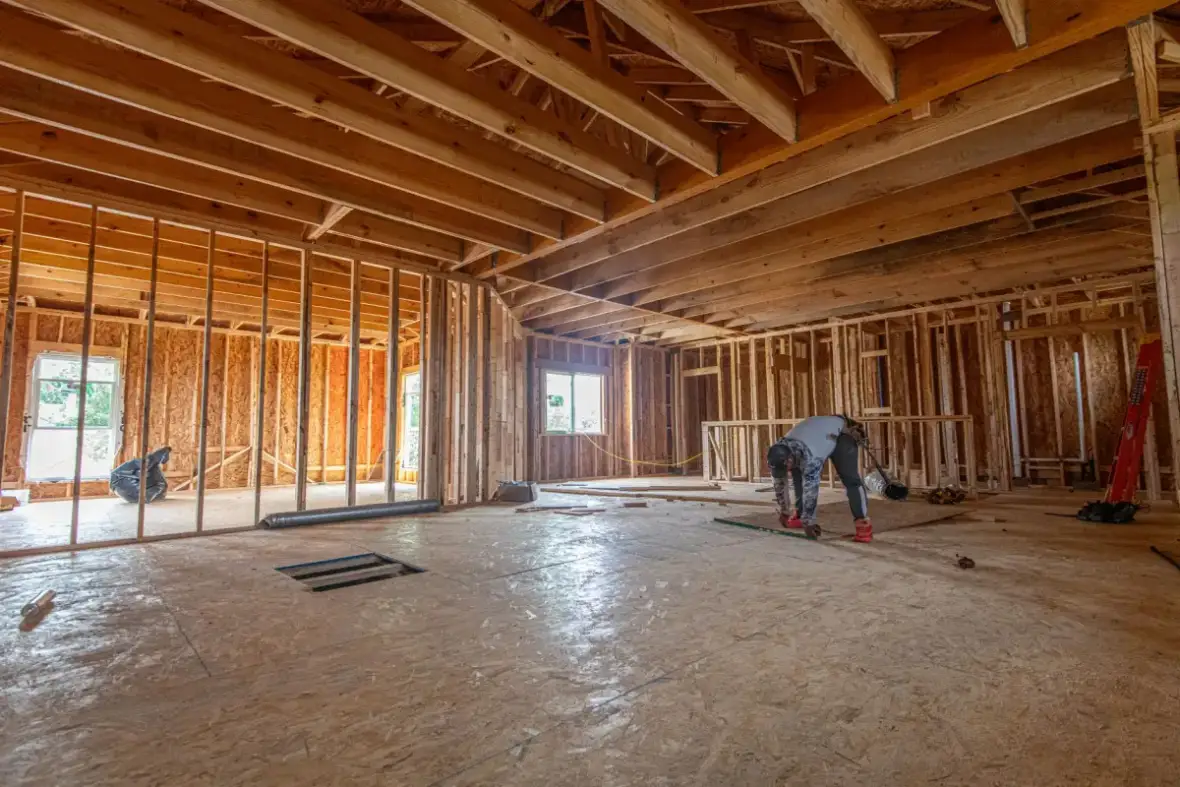
Taking out and reboarding a wall or a defined section. The judgment is where to stop, and the answer is at framing members rather than at the edge of the damage — a section cut to the centers of studs on either side gives the new board something to fasten to and puts the joint where it can be taped properly. In older Milwaukee houses that requires locating the framing rather than assuming a module, since studs in pre-war construction are not reliably on sixteen-inch centers and are sometimes true-dimension lumber.
Ceiling Drywall Replacement
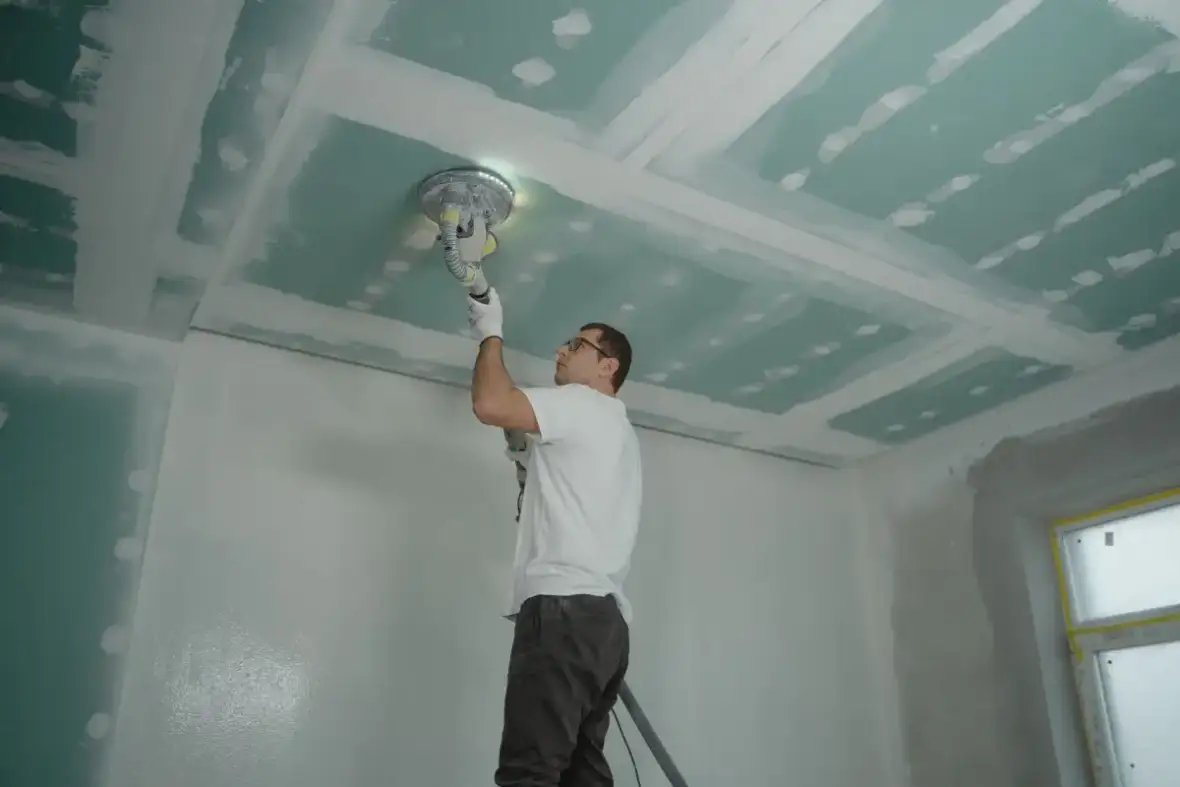
Usually driven by sag, water, or an assembly carrying more than it should. In this city the last case is common and specific: retrofit board hung over original plaster on furring strips, all of it fastened decades ago and all of it now hanging on those fasteners. Taking that down to the joists and reboarding correctly is a bigger job than adding another repair and is frequently the last one that ceiling will need. Ceiling replacement is heavier, slower and finished to a higher standard than wall work because of how ceilings are lit and viewed.
Partial Drywall Replacement
Replacing a defined section rather than a whole surface, which is the most common version and the one requiring the most thought about boundaries. Cut to a framing member, keep the new joint away from door and window corners where movement concentrates, and stagger it against existing joints. Then the transition has to be finished so the section does not read as a rectangle on the wall — perimeter joints feathered wide and texture blended out past them rather than stopped at the patch line.
Drywall Removal & New Installation
The full sequence, including the parts a quote tends to gloss over. Removal generates significant debris and dust and has to be contained, carried out and disposed of rather than piled in the yard. Then the cavity is open, and in an older house that is the moment that matters most: framing condition, moisture history, wiring, and whether there is any insulation in an exterior wall at all. New board goes in with the type chosen for the location, and finishing follows. The open-cavity inspection is what makes replacement worth more than its square-foot price.
Signs You Need Drywall Replacement
- A wall or ceiling patched three or more times in the same area
- Board that feels soft or crumbling after a water event
- A ceiling with a permanent sag that refastening will not correct
- A surface that reads visibly uneven under low-angle light
- A retrofit ceiling of board over plaster that is dropping fasteners
- An exterior wall coming apart anyway, in a house that has never been insulated
How Drywall Replacement Works
- 1
Decide Honestly Between Repair and Replacement
The first job is working out which service you actually need, and it is worth getting a straight answer rather than the more expensive one. Repair is right when the surrounding board is sound and the damage is localized. Replacement is right when the board has failed structurally, when a surface carries accumulated repairs that no longer sit flat, or when the original assembly was wrong for its span. A useful test on ceilings is whether refastening would help: if the board has taken a permanent set, pulling on it drives fasteners through the face rather than lifting it, and that settles it.
- 2
Set the Boundaries and Protect the House
Section edges go at framing members so new board has bearing and the joint can be taped, kept away from door and window corners where stress concentrates. In an older house the framing gets located rather than assumed. Then the space is protected, because removal generates far more dust and debris than people anticipate — floors covered, adjacent rooms sealed at the doorways, and a route planned for carrying material out. Fixtures, trim and anything mounted on the surface come off rather than being cut around, since cutting up to trim leaves an edge that cannot be finished cleanly.
- 3
Take It Down, and Then Actually Look
Board comes out and gets carried out rather than accumulating on site. Then the cavity gets examined properly. Framing for moisture staining, softening, fastener corrosion and any movement that was hidden. Insulation, or in a great many pre-war Milwaukee exterior walls, the complete absence of it. Wiring, which in a house of this age may have been extended and modified repeatedly. Anything that belongs to another trade gets flagged now rather than covered. And blocking goes in for whatever will be mounted on that wall later, because this is the only moment it is cheap.
- 4
Reboard, Finish and Blend the Perimeter
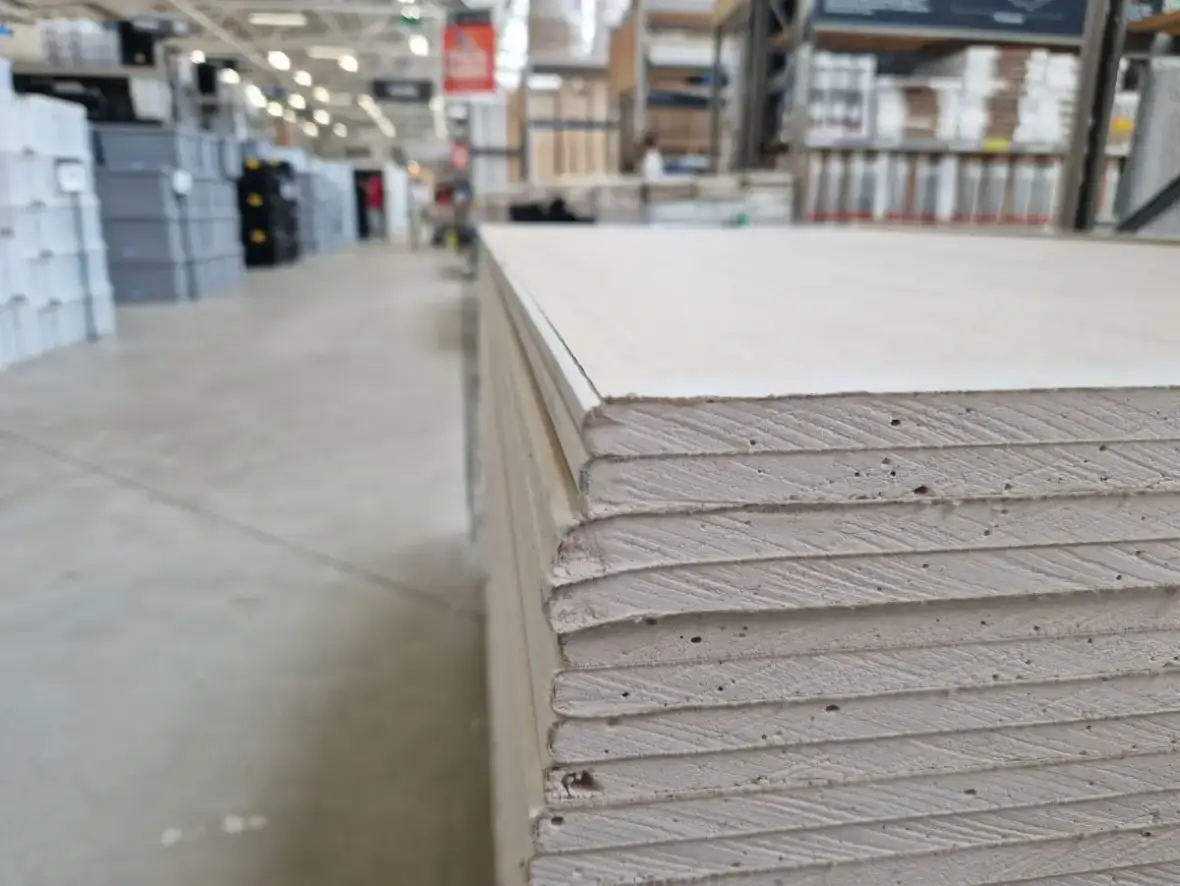
New panel goes in with the type chosen for the location — moisture-resistant below grade or in a bathroom, Type X where a rated assembly is involved, and the correct thickness for the span on ceilings. Joints stagger against existing board and stay off opening corners. Finishing runs as normal, with the perimeter joints between new and existing board feathered wide so the replaced section does not read as a rectangle. Texture is sampled from the surrounding surface and blended out past the boundary, and the area is primed before paint.
What Does Drywall Replacement Cost in Milwaukee, WI?
- Area being replaced and whether it is wall, ceiling or both
- Removal and disposal, which is real labor and a real haul-away cost
- What the cavity turns out to need once it is open
- Whether insulation is being added while the wall is accessible
- Panel type and thickness required for the location and span
- Texture matching difficulty around the perimeter of the new section
- Fixture, trim and cabinetry removal and reinstallation
- Containment and protection in an occupied house
| Service | Cost Per Sq. Ft. | Typical Job |
|---|---|---|
| New Drywall Installation | $1.50 – $3.00 per sq. ft. | $1,000 – $3,254 per project |
| Small Patch or Hole | $75 – $350 per patch | $300 – $500 for a contractor visit |
| Larger Wall Repair | $500 – $800+ per patch | Scales with how much comes out |
| Ceiling Repair | $297 – $472 per hole | $220 – $1,300 for the full ceiling |
| Water-Damaged Drywall | $500 – $2,500+ | Depends how far the moisture travelled |
| Texture Matching | $150 – $450 per patch | Runs 30 – 40% above a smooth finish |
Based on 2026 national cost-guide data from Angi, HomeGuide, and Homewyse. These guides price drywall work, and Milwaukee's older housing stock frequently isn't drywall — plaster repair, or a wall already layered with board over plaster, sits above these ranges because the method changes rather than just the square footage. Access in stairwells and occupied flats moves it too. You get a firm number after someone sees the job.
Replacement carries costs repair does not — demolition labor, debris haul-away, and whatever the open cavity turns out to need. That last item is genuinely unknown until the wall is open, which is why an honest quote allows for it rather than pretending it is zero. In an older Milwaukee house the same openness is also where the value is: adding insulation to an exterior wall while it is accessible costs a fraction of what it would as a standalone project, and it is worth pricing as part of the same job rather than deferring.
What to Look for in a Milwaukee Drywall Replacement Contractor
They Will Talk You Out of It When Repair Is Right
Replacement is the bigger job and the bigger invoice. A contractor who tells you a patch would do is giving you information worth more than the quote.
They Treat the Open Cavity as the Opportunity
In a pre-war house the wall being open is the only affordable chance to see framing, wiring and whether there is any insulation at all. Closing it without looking wastes the best part of the job.
They Locate the Framing Rather Than Assume It
Studs in an old Milwaukee house are not reliably on a modern module. Cutting to an assumption produces an opening with nothing to fasten the new board to.
They Include Disposal
Demolition debris is heavy and voluminous. A quote that does not cover haul-away is a quote with a pile in your yard attached.
Residential & Commercial Drywall Replacement
Residential
Residential replacement here is driven by water, accumulated repairs, and retrofit assemblies that have reached the end of their service. It is also frequently the moment a homeowner finally gets to insulate an exterior wall, which is worth planning for rather than discovering.
Commercial
Commercial replacement adds rated assemblies that have to be reinstated to their listed detail, occupied-space scheduling and containment standards. That work is covered on the commercial drywall repair page.
When Drywall Replacement Isn’t the Right Call
- Localized damage in otherwise sound board. That is a repair, and replacement mobilization is not worth paying for one hole.
- Surfaces where a water source is still active. The leak gets fixed and the cavity dried before any board goes back.
- Plaster over lath, which is a different material with a different decision set — see plaster repair.
- Ceilings where the span calls for 5/8 inch board but the budget only allows 1/2 inch. That reinstalls the problem you are paying to remove.
- Addresses outside Milwaukee County and the neighboring Waukesha, Ozaukee and Washington County suburbs.
Frequently Asked Questions
- Should I insulate the wall while it is open?
- In a pre-1940 Milwaukee house, this is usually the single best-value decision available during a replacement. A great many exterior wall cavities in houses of that era have no insulation in them whatsoever, and an open wall is the only time filling one is straightforward and inexpensive. Doing it as a standalone project later means either dense-packing through drilled holes or opening the wall again. If the cavity is already exposed, it is worth pricing the insulation before the board goes back rather than after.
- When is replacement better than another repair?
- Three situations make it clear. When the board has failed structurally — saturated gypsum, a ceiling with a permanent set — because compound over compromised board has nothing to hold. When a surface carries several accumulated patches and no longer reads flat under angled light, since each additional patch makes that worse. And when the original assembly was wrong, most commonly ceiling board too thin for its span or a retrofit layer over plaster. A rough rule: by the third repair in the same area, run the numbers on replacing the section.
- Do you replace the whole wall or just the damaged part?
- Usually just a section, cut back to framing members so the new board can be fastened properly and the joint can be taped. Replacing an entire wall is only worth it when damage is spread across most of it or when the wall is coming out for another reason — insulating an exterior wall being a common one here. What matters more than the size of the section is where its edges land: at framing, staggered against existing joints, and away from opening corners.
- Will the replaced section be visible afterward?
- It should not be, and whether it is comes down to two things. The perimeter joints between new and existing board have to be feathered wide, because a section finished with narrow joints reads as a rectangle under raking light even when the plane is true. And the texture has to be sampled from the surrounding surface, tested on scrap, and blended out past the boundary rather than stopped at it. Both take time and both are where a cheap quote finds its savings.
- What happens if you find problems behind the wall?
- It gets raised before it gets covered. In houses of this age the common finds are moisture staining on framing, no insulation at all in an exterior cavity, wiring that has been extended and modified over decades, and framing damage nobody knew about. Some of that belongs to other trades. The productive approach is to look, document what is there, and price additional work as a decision rather than absorbing it silently or covering it up — because once the board is back on, the next chance is years away.
- How long does a replacement take?
- Removal and reboarding move quickly — a single wall section is often a day. The schedule is set by the finishing, because each compound coat has to dry through before the next and that depends on temperature and humidity rather than labor. A room typically runs four to seven days end to end, longer in humid summer conditions. If the open cavity turns up work for another trade, that time gets added rather than absorbed, which is why flagging it early matters.
Learn More
- Gypsum Association — technical guidance on gypsum panel selection, spans and installation
- Focus on Energy — Wisconsin energy efficiency program covering wall insulation in existing homes
- City of Milwaukee Development Center — local permitting and inspection requirements for residential alteration work
Need Drywall Replacement in Milwaukee, WI?
Tell us what’s going on and get an on-site estimate — no charge for the visit, and no obligation to book the work.
Get My Free Estimate